
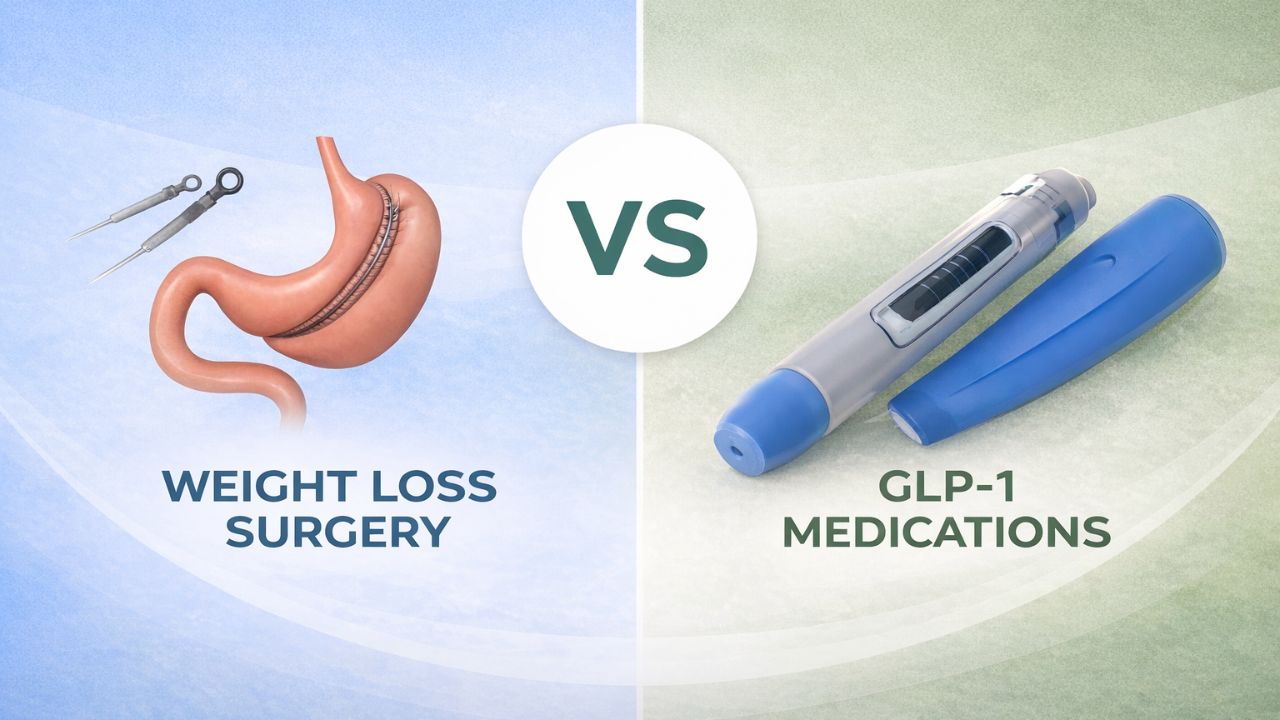
Weight Loss Surgery vs GLP-1 Medications: What You Need to Know
With the growing popularity of injectable weight loss medications (such as GLP1), many people considering weight loss are asking the same question:
“Should I try medication — or is weight loss surgery the better option?”
Both approaches can support weight loss. But they work very differently, and importantly, they deliver very different long-term outcomes.
At BodyFree, we focus on helping patients understand their options clearly — so they can make the right decision for their health, not just follow trends.
A guide (prepared by bariatric surgeon, Dr David Joseph) provides a comprehensive overview of what need to know about Weight Loss Surgery vs GLP-1 Medications.
Key Takeaways
What is the main difference between weight loss surgery and GLP-1 medications?
Weight loss surgery physically changes the digestive system to reduce how much you can eat, alter hunger hormones, and in some procedures reduce nutrient absorption, while GLP-1 medications work hormonally to suppress appetite and regulate blood sugar without altering anatomy.
Which option leads to more significant long-term weight loss?
Weight loss surgery generally produces greater and more sustained long-term weight loss compared to GLP-1 medications.
Do GLP-1 medications provide permanent results?
No, GLP-1 medications typically require ongoing use, and weight regain is common if treatment is stopped.
What are the main advantages of GLP-1 medications?
GLP-1 medications are non-surgical, less invasive, and can be an effective starting point for people not ready or eligible for surgery.
What are the main advantages of weight loss surgery?
Surgery offers more durable weight loss, significant improvement in obesity-related conditions, and does not rely on ongoing medication adherence.
What are the risks or downsides of each option?
Surgery carries procedural risks and recovery time, while GLP-1 medications may cause side effects, require long-term use, and can be costly over time.
Is one option better for everyone?
No, the best option depends on individual factors such as BMI, health conditions, goals, and willingness to undergo surgery or long-term medication.
Can weight loss surgery and GLP-1 medications be used together?
In some cases, they may be combined or used sequentially to optimise outcomes, depending on clinical advice.
How Each Treatment Works
Weight Loss Surgery Explained
Weight loss surgery (such as gastric sleeve or gastric bypass) is a metabolic procedure that changes how your body regulates weight.
It works by:
- Reducing stomach size
- Changing hunger hormones
- Improving metabolism
- In some procedures, reducing nutrient absorption
Most patients can expect:
- Around 25–35% total body weight loss
- Significant improvement in conditions such as:
- Type 2 diabetes
- High blood pressure
- Sleep apnoea
Surgery is designed to provide a long-term, durable solution.
GLP-1 Medications Explained
GLP-1 medications (injectable weight loss medications) are non-surgical treatments that help with weight loss by:
- Reducing appetite
- Slowing digestion
- Helping you feel full for longer
Typical outcomes:
- Around 10–20% total body weight loss
- Results are generally dependent on ongoing treatment
These medications can be effective for some patients, particularly in the short to medium term.
Long-Term Weight Loss Results Compared
Many patients now try weight loss medications before considering surgery.
In practice, the experience is mixed.
Some patients:
- Do well initially
- Lose weight steadily while on treatment
However, others:
- Struggle with side effects such as nausea or gastrointestinal discomfort
- Find the results are less than expected
- Stop due to ongoing cost
And importantly:
👉 Some patients do not achieve meaningful weight loss
👉 Others regain weight once medication is stopped
This is because GLP-1 medications generally need to be used long-term to maintain results.
Cost: A Key Consideration
Cost is one of the biggest differences between these options.
Weight Loss Surgery Cost
- With private health insurance: approximately $4,990–$8,000 out of pocket
- Without insurance: typically $14,490–$28,000
- Some patients may also be eligible to use their superannuation for weight loss surgery costs or obtain a medical loan.
Weight Loss Medications Cost
- For patients eligible under government subsidy (e.g. diabetes): approximately $30–$160/month
- For private weight loss prescriptions: approximately $380–$750/month
Over time, ongoing medication costs can exceed $20,000–$45,000+, depending on duration of use.

Is Weight Loss Surgery or GLP-1 Medication Better in the Long-Term?
This is the most important question.
Weight Loss Surgery
- Backed by strong long-term evidence (10–15+ years)
- Sustained weight loss and improvement in metabolic health
- Does not rely on ongoing medication in most patients
GLP-1 Medications
- Effective while being used
- Long-term weight maintenance typically requires continued treatment
- Weight regain is common if medication is stopped
Is Weight Loss Surgery or GLP-1 Medication Safer?
Weight Loss Surgery Safety & Risks
Modern bariatric surgery is very safe when performed by experienced specialist surgeons.
As with any operation, there are risks, including:
- Bleeding
- Infection
- Nutritional deficiencies
These risks are carefully managed with appropriate follow-up care.
GLP-1 Medications Side Effects
Common side effects include:
- Nausea
- Vomiting
- Gastrointestinal discomfort
For some patients, these side effects can limit how long they are able to stay on treatment.
A Balanced Approach
For some patients, medications may play a role:
- As a starting point
- As preparation before surgery
- Or in selected cases after surgery
However, for patients seeking significant, long-term weight loss, surgery remains the most reliable and durable treatment option.

Real Patient Scenarios: How This Plays Out in Practice
Scenario 1: Medication First, Then Surgery
Sarah, 42, BMI 36
Sarah wanted to avoid surgery and started injectable weight loss medication.
- Lost around 8kg initially
- Experienced ongoing nausea and fatigue
- Found the cost difficult to maintain long-term
After stopping treatment:
- Appetite returned
- She regained the weight
She later proceeded with a gastric sleeve:
- Achieved sustained weight loss over 12 months
- Improved energy and overall health
- No longer required ongoing medication
Scenario 2: Medication Success (Short-Term)
James, 38, BMI 31
James had moderate weight gain and wanted to avoid surgery.
- Used injectable medication for several months
- Lost approximately 10–12% of his body weight
- Used this as a kickstart to improve lifestyle habits
However:
- He understood that maintaining results would likely require ongoing treatment or strict lifestyle changes
For patients like James, medication can be a useful short-term tool, particularly when weight loss goals are more modest.
Scenario 3: Surgery First — Long-Term Success
Melissa, 45, BMI 41
Melissa had struggled with weight for many years and multiple attempts at dieting.
She proceeded directly with gastric sleeve surgery.
- Lost over 30% of her body weight
- Significant improvement in blood pressure and sleep apnoea
- Maintained results long-term
She did not require any additional medication to support her weight loss.
Scenario 4: Surgery + Additional Support
Michael, 52, BMI 53
Michael had severe, long-standing obesity with multiple weight-related health conditions.
He underwent weight loss surgery and achieved a strong initial result:
- Lost a significant amount of weight in the first 12 months
- Saw improvement in his overall health
However, by around 18–24 months, his weight loss plateaued slightly above his goal.
With structured follow-up:
- Additional strategies were considered
- In selected cases, medical support may be introduced
This helped him progress further toward his goal weight and maintain long-term results.
👉 Have you checked your BMI?

Which Option Is Right for You?
- Weight loss medications can be helpful — but often short-term or variable in effectiveness
- Surgery provides more consistent and durable results
- Some patients benefit from a combined or staged approach
👉 While most patients achieve excellent results with surgery alone, a small number may benefit from additional support — reinforcing the importance of long-term follow-up and personalised care
The Bottom Line
- GLP-1 medications can support weight loss, but typically require ongoing use
- Weight loss surgery delivers greater and more sustained results for most patients
- Long-term success depends on having a clear, structured plan
Why BodyFree Focuses on Surgery
At BodyFree, we specialise in proven surgical solutions because they offer:
- Consistent, long-term results
- Significant improvement in obesity-related health conditions
- A structured pathway with ongoing support
Our focus is on helping patients achieve safe, effective and lasting weight loss — not short-term solutions.
Next Step
If you’re considering weight loss surgery and want to understand your options, our team can guide you through the process and help determine what’s right for you.